Now introducing...

Dear readers old and new,
I am so excited to be relaunching a small offering in a brand new and considerably different form. The standard programming will now comprise five film recommendations per week, accompanied by a brief (not my strong suit but we’ll see) pitch in support of each pick. I will make an effort to diversify each week’s offerings in terms of genre, tone, and mood, and going forward, the suggestions will be organized around a loose theme. I couldn’t retroactively apply a theme to my picks for this week (not for lack of trying), but if you identify one, please do let me know.
Weekly suggestions may include new films currently in theaters and repertory cinema screenings (New York-based), though the majority will be available online to stream or rent. I will also occasionally publish supplementary essays on the films I suggest or even “other topics”.
So without further ado, I suggest you watch:
sex, lies, and videotape dir. Steven Soderbergh (1989)
InternetArchive or available to buy
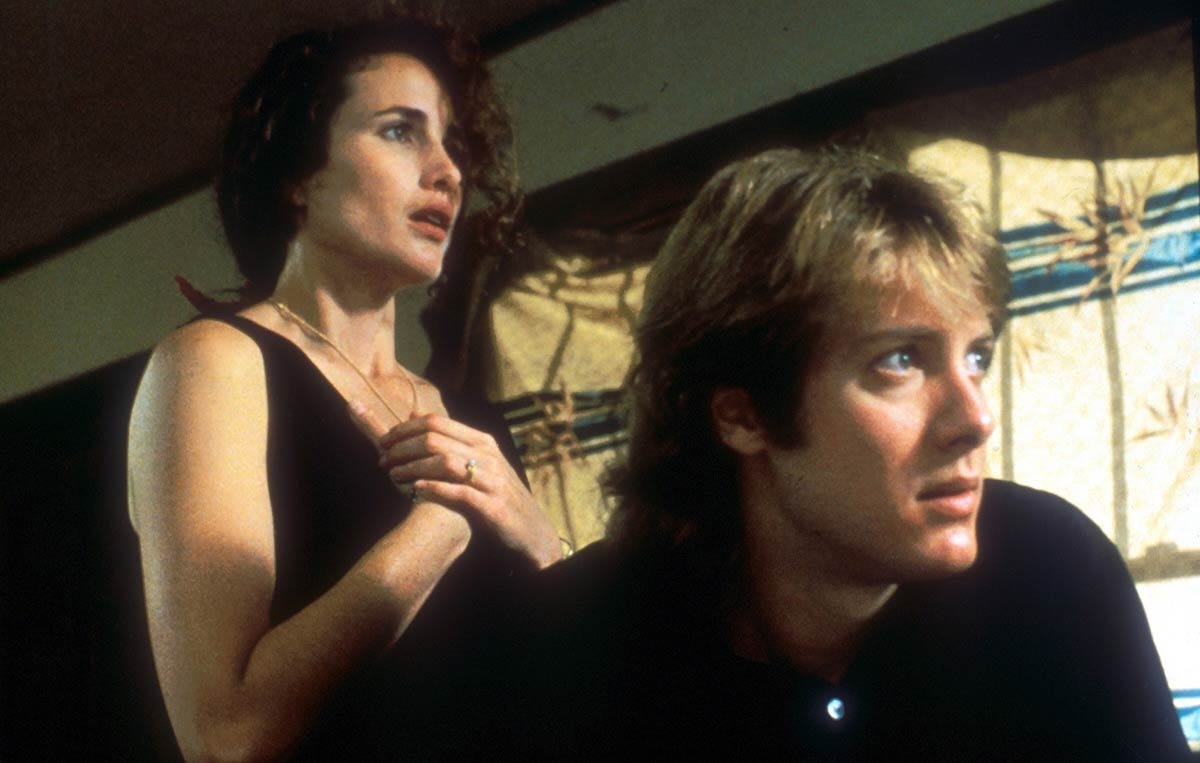
Credited as proving the commercial viability of independent films, Soderbergh’s directorial debut sex, lies, and videotape won the Palme d’Or when it premiered at Cannes, making him the award’s youngest recipient at 26, but you should really watch it anyway. It’s difficult to articulate just what makes sex, lies so good; this may be an overly specific analogy, but it’s like an affogato. Its parts are simple, but when the ice cream is exceptionally creamy and solid and the espresso velvety and intense, you find yourself reveling in how extraordinary simple things can be. The ingredients here are in part the performances by Andie MacDowell as a repressed young Louisiana housewife, already failed by the Reagan era promise of fulfillment through traditionalism, and James Spader as an erstwhile friend of her lawyer husband and countercultural drifter who rolls into town with no titles (or deeds) to his name and implodes their lives. It’s an exploration of talking about sex and not talking about sex: the consequences of frank confrontation and avoidance, respectively. I particularly love how Soderbergh plays with nonchronological storytelling toward the end and a delightfully tense scene involving a precarious glass of iced tea. However, one person who was very unhappy with sex, lies unexpected Palme win was Spike Lee, whose masterpiece Do the Right Thing premiered at Cannes the same year, which brings me to…
Summer of Sam dir. Spike Lee (1999)
Free on effedupmoviesdotcom or available to rent
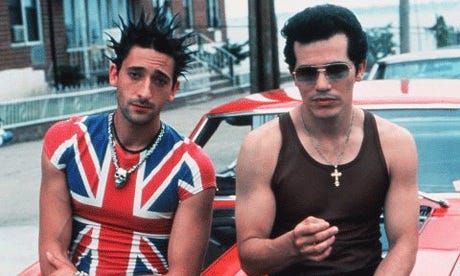
I’ll come right out and say it: Summer of Sam is my Boogie Nights. In this late 70s set melodramatic thriller, Lee heads north, all the way to the Bronx, where his terribly unfulfilled and misunderstood characters navigate crises of masculinity and sexuality against the unforgiving backdrop of fear and suspicion created by the Son of Sam’s serial murders. The brilliant John Leguizamo, who I think should be collecting Oscars every year but is probably happy instead, plays Vinny, a man who constantly cheats and explodes on his wife (a heartwrenching and, when she needs to be, equally explosive Mia Sorvino) due to his shame-based inability to articulate his desire for kinkier sex. Adrian Brody plays a sweet and tragic foil as Richie, Vinny’s childhood friend who has returned to their hometown with a London punk aesthetic and affected British accent to match. Richie’s unabashed difference (including latent queerness) is perceived as a direct threat by Vinny’s macho buddies. Everyone is afraid, guilty, panicked and pointing fingers with no consideration of the consequences. Lee is expert at dropping his audience into contrasting perspectives; mohawked Richie sticks out like a sore thumb around the neighborhood, but when Vinny and his wife go to see him perform at CBGB, they are suddenly the embarrassing outsiders who don’t know how to act or dress. Our identities are so relative, so fungible, and the precarity of this reality is felt deeply throughout the film. Some critics felt Summer of Sam was too sprawling, but I feel the ambition truly pays off, making it one of Lee’s best films to date.
Deep Cover dir. Bill Duke (1992)
Criterion Channel, free on Tubi with ads, or available rent
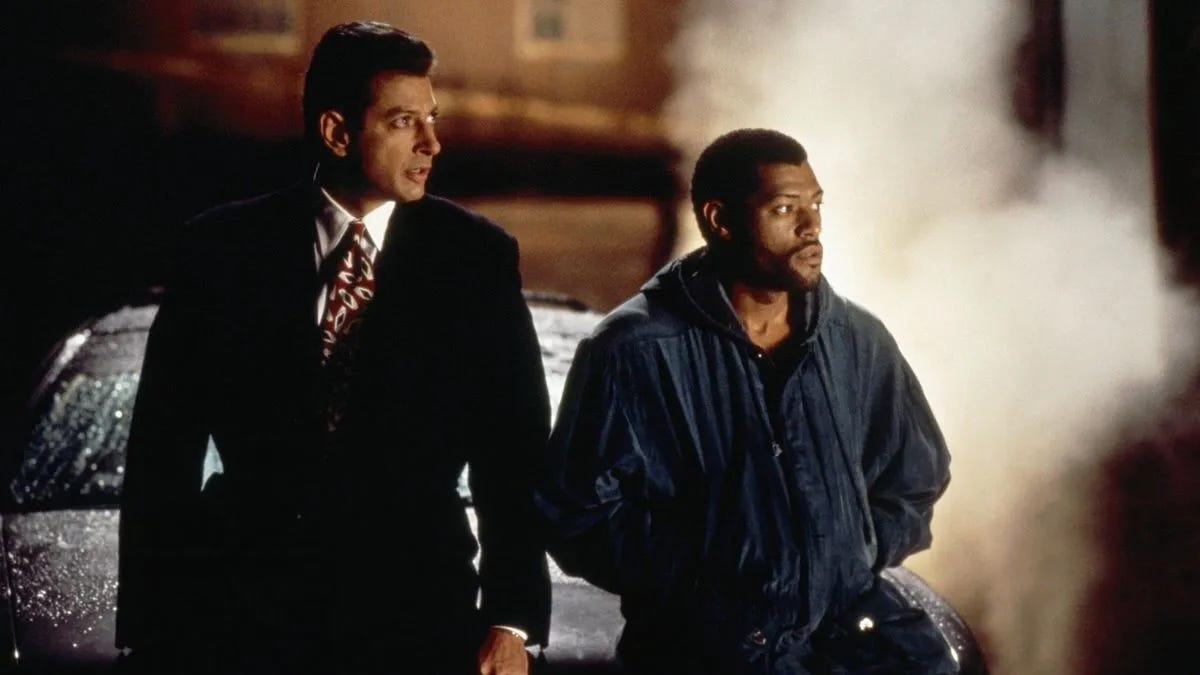
This extremely stylish and underwatched neo-noir features an atypical and compelling relationship at its center. Rather than debating the motives and trustworthiness of a femme fatale, protagonist Russell Stevens Jr. (Laurence Fishburne), a Black police officer undercover as a drug dealer, must navigate working alongside David Jason (Jeff Goldblum), an implicitly Jewish attorney and drug trafficker, to climb his way up a prominent LA drug importation syndicate. Like most crime movies, its twisty plot occupies the foreground, but Deep Cover also boasts impressive character development, memorable dialogue, and a nuanced exploration of Black and Jewish identity/relationality in American culture. It makes real use of its genre’s propensity for nihilism and warranted paranoia, and it also features some absolutely gorgeous double-breasted suits. Bonus trivia: its title track by Dr. Dre features Snoop Dogg in his first studio release.
Revenge dir. Coralie Fargeat (2017)
Free on Tubi with ads or available to rent

Fargeat, best known for The Substance, made her directorial debut with this hyper-stylized, hyper-violent rape-revenge thriller that is, despite everything I’ve just said, very fun. If you’re a fan of The Substance, you’ll love seeing her distinct filmmaking sensibilities on display in a more nascent form. Jen (Matilda Lutz) is vacationing with her rich, married boyfriend in the desert, when his two friends show up unannounced and allegedly uninvited. It’s a structurally traditional genre piece: Jen is raped by one of the friends (depicted with gravity and restraint), they leave her for dead, she hunts them down and kills them. But Fargeat has so much fun playing with genre and the lexicon of exploitation cinema and in the process creates something willfully absurd but emotionally resonant. Revenge is visually striking, with gorgeous, complex frames, thrilling choreography, and a color palette of dirt, blood, and soot punctuated by bubblegum pink accessories and neon stained glass. There is one sequence involving a man digging a piece of glass out from deep inside his foot that had me shrieking with disgust and delight. It contains another component I adore in a movie: absolutely impossible amounts of blood.
My Beautiful Laundrette dir. Stephen Frears (1985)
InternetArchive (with Spanish subtitles and not great picture quality), Tubi free with ads, or available to rent
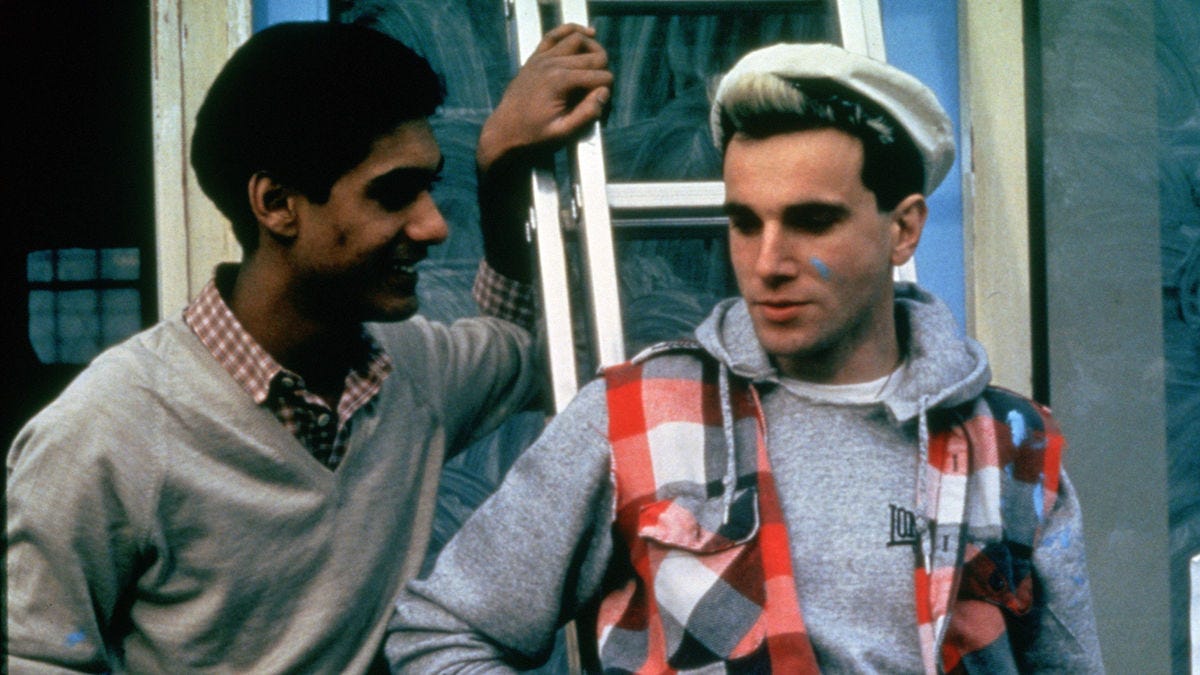
With a playful, bubbly, yet subtly ominous score from Hans Zimmer, My Beautiful Laundrette is a tragicomic love story about Pakistani-British Omar (Gordon Warnecke) and his childhood friend/lover Johnny (Daniel Day-Lewis), a sort of nonideological yet officially right-wing punk. The two are reunited after a period of estrangement and fall so easily back into each other’s embrace: a small and ultimately penetrable utopia that is no less life-giving for its vulnerabilities. Something lovely and refreshing about this movie (particularly for the 80s) is that the characters spend no time freaking out about being queer, they just are. It’s romantic, funny, and features a scene of hot young DDL spitting champagne into his costar’s mouth that permanently altered my brain chemistry when I first saw this in high school. What are you waiting for?
Happy watching! I would absolutely love and encourage you to discuss these movies in the comments if you’re so compelled, but please tag spoilers.
I will not be utilizing content warnings, so please research ahead of watching as needed.